

Millennials are kinda right when they say we’re living in a sex-negative era. I have listened to hundreds of TikToks about “Voice Note Guy” being a predator. Which he is—and a huge douche—but guys, come on.
Should men be harassing women they barely know for sex? No.
But they do it anyway. Hit the block button or call him a fucking asshole and keep it moving.
My favorite sociological theory about media consumption is that horror films reflect back what we fear most.
In the mid-2010s, it was home invasions and racism. The real-world connective tissue? Donald Trump, immigration, and the fear that violence could enter your home.
As we move further into the digital age, Generation Z has found a new Big Bad Wolf: love and intimacy.
The Beginning
Depending on who you ask, the Golden Age of Horror spans somewhere between 1928 and 1988.
One of the genre’s defining inventions was the Final Girl. She exists as a moral counterweight to everything the killer represents. She doesn’t have sex. She doesn’t do drugs. If she drinks, it’s because everyone else is. She’s also the first person to realize something is terribly wrong.
I’ve written before about why I think the Final Girl resonated so deeply with audiences, so I won’t rehash the entire argument here. The short version? Horror has always been interested in our anxieties surrounding sex, romance, and gender.
The New Age of Cinema
A recent Substack article introduced me to the concept of heteropessimism. Coined by critic Asa Seresin in 2019, the term describes “the widespread fatigue of participating in traditional straight dynamics without actually abandoning them.”
People are tired of modern straight relationships. Which is fair, because they kind of suck.
Women work eight-hour shifts just to come home and clock in again. They cook, clean, and make sure the kids finished their homework. They’re the therapist, nurse, best friend, and lover to their boyfriend or husband.
After decades of the same rigmarole, it sounds exhausting and unfulfilling.
People keep wondering what happened to the 2000s romantic comedy. It died along with those fairytale relationships.
Romantic comedies almost always ended with the grand kiss because audiences didn’t care about the reality of a relationship. They cared about the fantasy of finding one.
Movies of the last decade revolve around straight couples trapped in unhappy relationships. And audiences eat it up.
Oh, the horror!
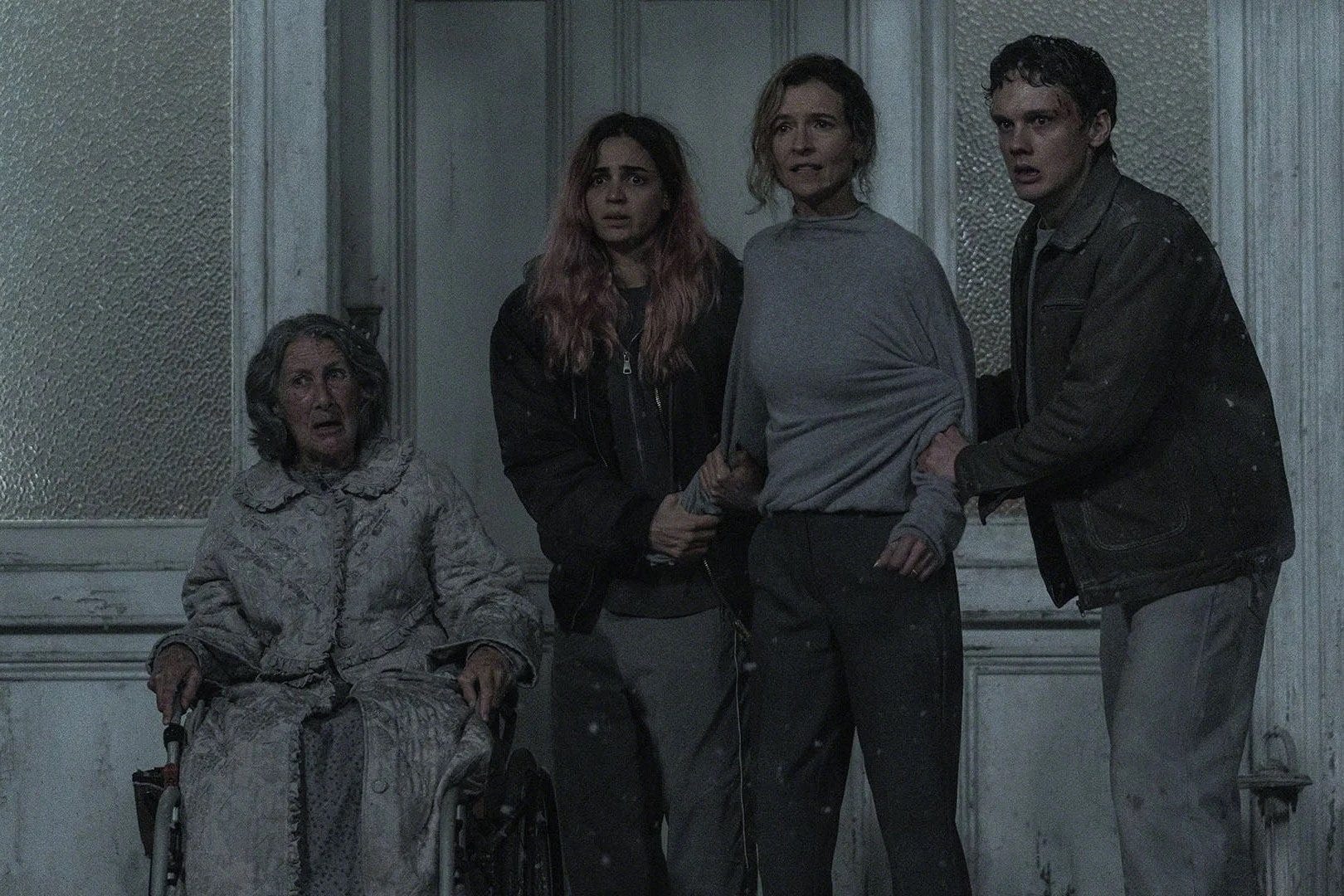
I loved Evil Dead Burn.
But holy shit, I hated the main character.
I wouldn’t describe the modern horror man as useless, but passive. He is so passive that it’s painful to watch.
And before the responses roll in—I know the movie is about domestic violence. I know the dad was abusing the entire family. That’s why I’m calling Joseph passive, not useless.
This man watched his possessed father brutally murder his girlfriend—who was screaming for help, mind you—and did nothing. He climbed out of the car and ran.
When he finally chooses to react, it’s to kill his possessed girlfriend. And I mean he brutally smashes her head in.
Then he returns to passivity and allows the Deadite possessing his father to continue terrorizing his family. Perhaps the point is that he’s no better than the men of his family. He can’t stand up to masculinity, but has no issue silencing femininity.
Notice how he only had that energy for a woman and not any of the men in his life? He’s just as bad as his father and brother.
He watches horrific violence unfold and refuses to intervene until his girlfriend is no longer “his” girlfriend. His first decisive act is against a woman who can no longer fight back.
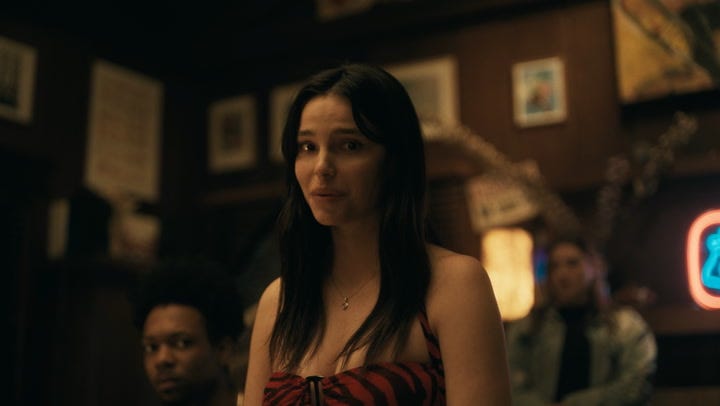
I could write an entire essay about Obsession, and there are probably hundreds on this app.
But I have yet to see anyone discuss how Bear shuts down at the slightest hint of friction.
The most emotion we get from him is when he accidentally kills his cat at the start of the movie. And it wasn’t even over his cat! He was crying over Nikki! Then, like a weirdo, he scrolls Nikki’s Instagram account.
Any time the real Nikki pleads for help, he shuts down. Like completely leaves his body.
Specifically, the scene at the party. Nikki is stabbing herself repeatedly with a piece of glass, screaming, “It’s not me!” and Bear just zones out in his chair.
Is it guilt over ruining her life? Is it embarrassment?
I’m leaning toward the latter. He’s frustrated because she isn’t doing what he wants.
When he finally becomes reactive at the end of the movie, it’s to throw the pills back up. He’s content with letting Nikki suffer to get what he wants.
He watches her unravel and only acts when his fantasy begins to collapse.
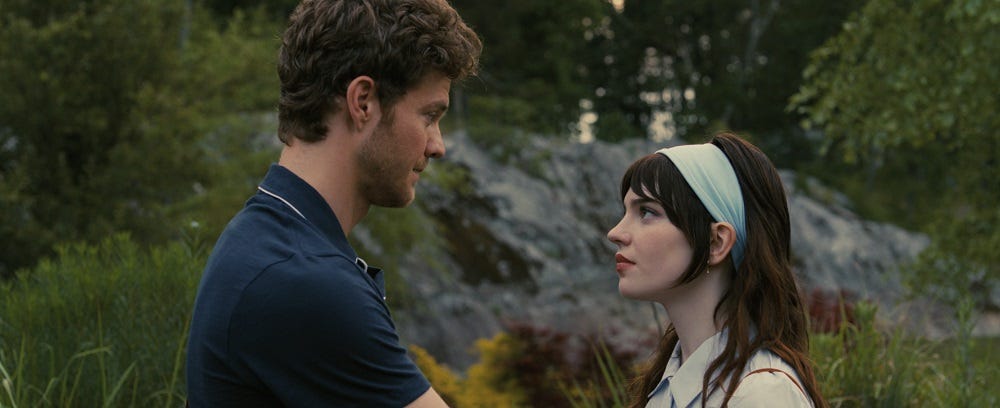
Jack Quaid plays a nice-guy douchebag so well that you almost sympathize with his character, Josh.
Companion tells the tale of this lonely man seeks out intimacy through technological advancement. You almost feel sorry for him until you realize his girlfriend isn’t human, but a robot.
Rather than opening himself up to vulnerability and reciprocity, he manufactures connection. He engineers a partner who can’t say no.
And when she stops behaving how he wants, he resorts to violence.
These men all want intimacy, but not the emotional responsibility that comes with it. They want sex, as long as the woman remains silent.
And that’s the modern fear, isn’t it? Situationships. Almost relationships where the man gets constant sexual access and doesn’t have to text you back.
Then you go online and whine about being ghosted. A true modern romance story.
Masculinity is no longer the macho, football-playing buffoon. At the height of the slasher boom, the football boyfriend was the first to die. He died because he assumed he knew better. Now he’s shy, quiet, and awkward. He’s funny or has a niche interest. And his girlfriend is stunning and he doesn’t deserve her.
In the end, the woman takes the risk or makes the sacrifice play.
Thya stays beside Joseph throughout the first half of the movie. She doesn’t question his passivity or stand up to his family.
She’s brutally murdered anyway.
Nikki has her autonomy stripped from her and is sexually assaulted by Bear. Every time she begs for mercy, he uses his self-loathing to guilt the audience.
Her life is destroyed anyway.
Iris is the perfect companion, until she isn’t. Josh resorts to violence as punishment.
She lives, surprisingly.
Compare this to our current culture of the idea of man — he’s a protector and provider with a lot of money. On the upside, all of these movie men die because of their passivity. A satisfying conclusion for the useless Modern Horror Movie Man.
But maybe Millennials were right. We aren’t living in a sex-negative era.
We’re living in an intimacy-negative one. And the patriarchy set that system up.