

Introduction
It’s been a few weeks and I feel as though I can finally confess.
I really did not care for the Stranger Things ending.
Ten years of build-up for a forty-five minute epilogue that read like a first draft. And I saw it in theaters. If I had watched it at home, I would have turned it off.
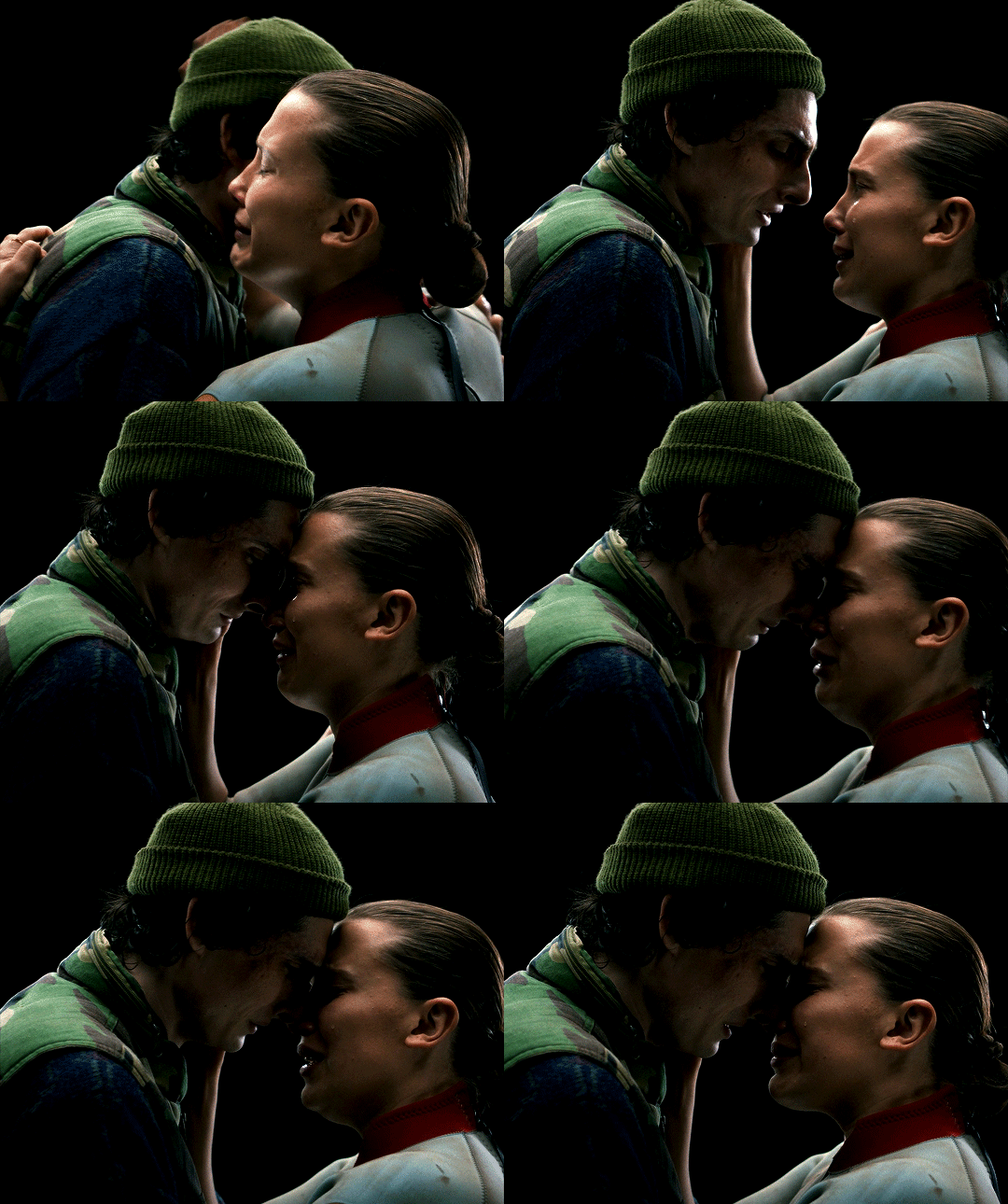
The writing is one thing. The choice they make for Eleven is the bigger problem.
Female martyrdom is when a story treats a woman’s body as the receipt for everyone else’s closure. Her pain becomes a public resource. Her death becomes social repair.
And it ties into my previous essay, Sex, Survival and the Death of the Final Girl. The Final Girl is a myth now.
Eleven sacrifices herself with the lazy excuse that “it won’t end if I’m still alive,” which—due to the Duffer Brothers’ writing—may or may not even be true. But that’s almost beside the point. The point is that the story can’t imagine her living. It can only imagine her useful.
There are arguments against reading it this way—it’s not their moral responsibility, it’s fiction, people need to “grow up”—but I disagree.
The media we consume shapes how we understand the world. So why do so many stories keep reinforcing the same idea: that women don’t get bodily autonomy, they get narrative utility? That the first “choice” a powerful girl makes for herself is to end her life for the benefit of everyone else?
That’s not a twist. That’s a tragedy.
Eleven and Elphaba spend their narrative arcs being manipulated, lied to, and tortured by the people around them. And when they’re finally granted a sliver of autonomy, they use it to disappear.
Both endings are technically ambiguous, but the messaging is clear. You do not exist to be happy. You exist to teach everyone else resilience. You exist to make other people better. And then you vanish—quietly, conveniently—before anyone has to do the hard work of accountability.
As a girl, imagine how that lands in your chest. You spend two hours or ten years watching, hoping, cheering for this underdog—this girl who is bullied, misunderstood, treated like a monster—and you identify with her struggle, even if you don’t want to admit it.
And then she “chooses” death.
Everyone smiles, grateful they got to know you, grateful your suffering made them softer, wiser, redeemed. While you’re just gone. And no one has to apologize for not being a better friend. No one has to show up for you. Hell, we don’t even see anyone publicly mourn you.
That’s the function of female martyrdom: it lets the community feel cleansed without anyone changing.
Are women born wicked?
Neither Elphaba nor Eleven gets a normal childhood.
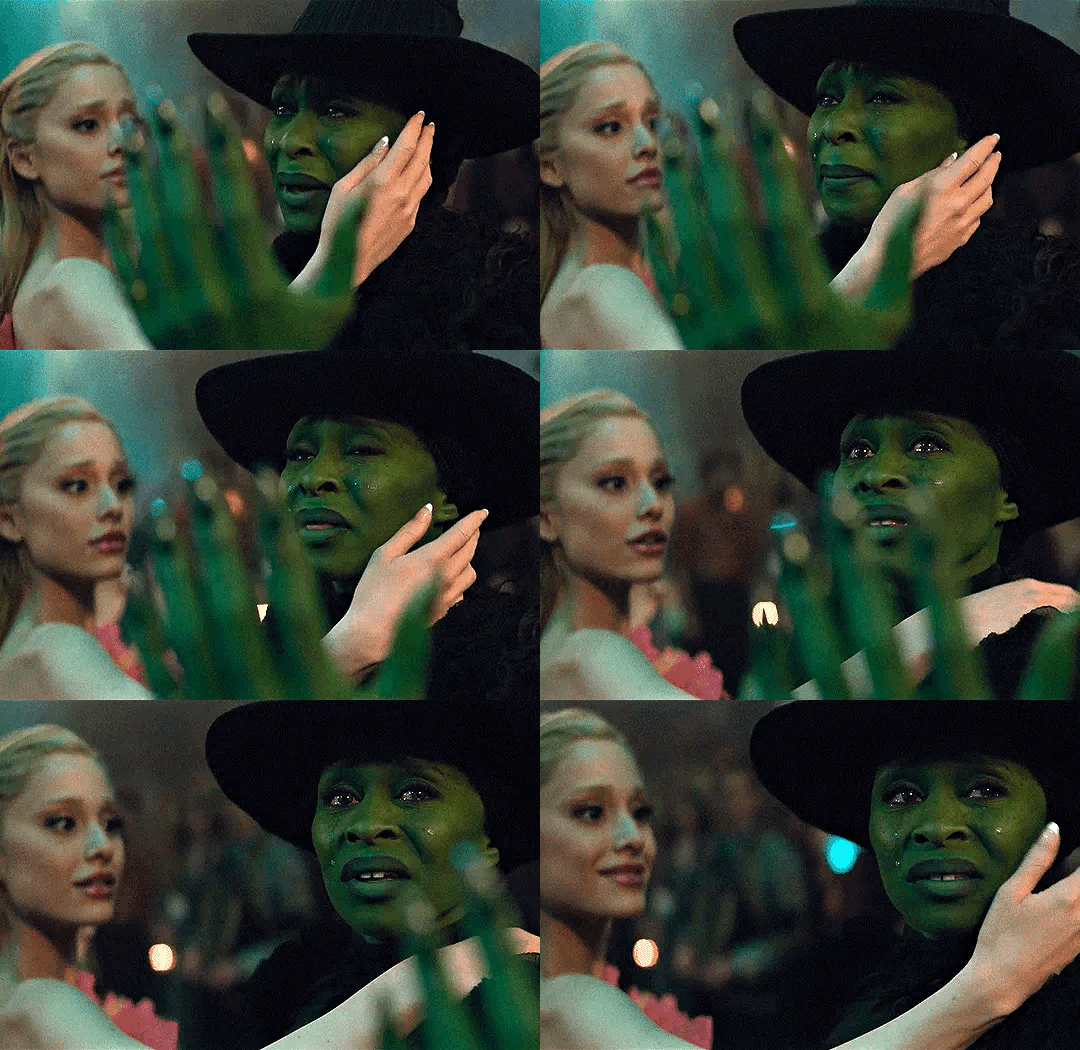
Elphaba is tormented for the color of her skin. She’s ostracized, and the onset of her powers doesn’t improve her life—it makes her easier to fear. She’s publicly humiliated by Glinda and her followers, who successfully turn the rest of the student body against her.
Her relief from misery is temporary. A few months after she finally makes friends, she fulfills her one true wish: she meets the Wizard. And the moment she refuses to sacrifice her autonomy—refuses to become a tool—she is immediately rebranded. Not complicated. Not human. Wicked.
She spends the remaining years of her life hiding and on the run. She never gives up her fight for Animal rights. And when the Wizard finally falls, Elphaba still cannot safely remain in Oz. The citizens still believe she’s a criminal—and despite Glinda offering to tell Oz the truth, Elphaba declines.
Glinda enjoys the glory of saving Oz, while Fiyero and Elphaba disappear together forever. Glinda is the only one who knows—and the only one who is devastated by it.
Stranger things have happened
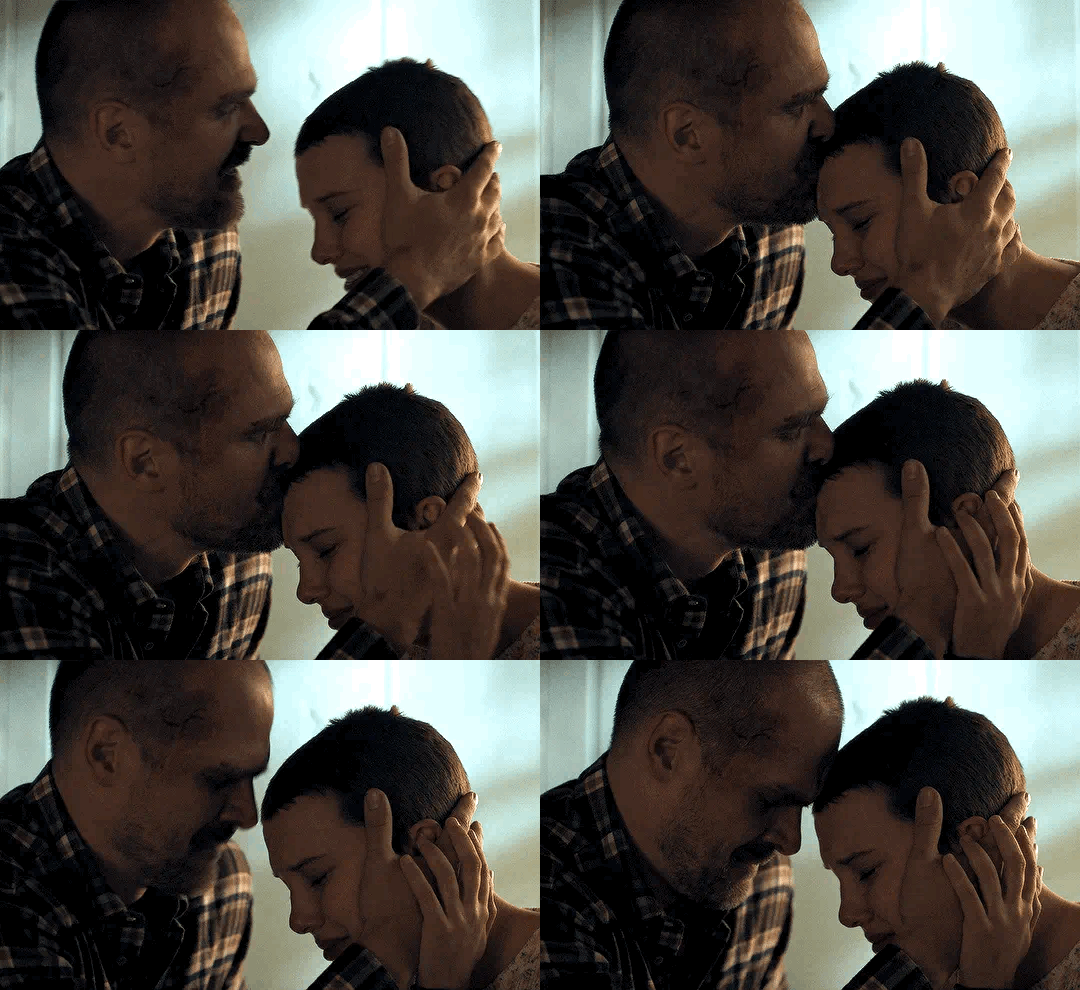
Eleven spends her entire life being experimented on and manipulated. She experiences moments of joy with her friends, with Hopper—what it means to be truly a part of something good.
The choice to end her life didn’t belong to Eleven. She decides the horror won’t stop if she remains alive, and maybe that’s true. Maybe the military would have hunted her down, or the Upside Down would have made some dramatic reappearance—but how depressing is that as a moral?
The girl spends her life tormented and all she gets in the end is death. Not even a funeral. Hardly a thank you.
Meanwhile, Max—who was in a coma for two years—gets to graduate and walk again. Will and Dustin go off to college. Mike tells the story and becomes a writer.
Sure, Eleven’s death benefits the “greater good.” But she was still a person. She had an interior world. She had wants and dreams. And it all gets reduced to a conclusion that feels less like catharsis and more like convenience.
If you’re a survivor or a victim of bullying—don’t look to media to comfort you. Your favorite show might still insist your suffering only ends once you’re gone.
The third act problem
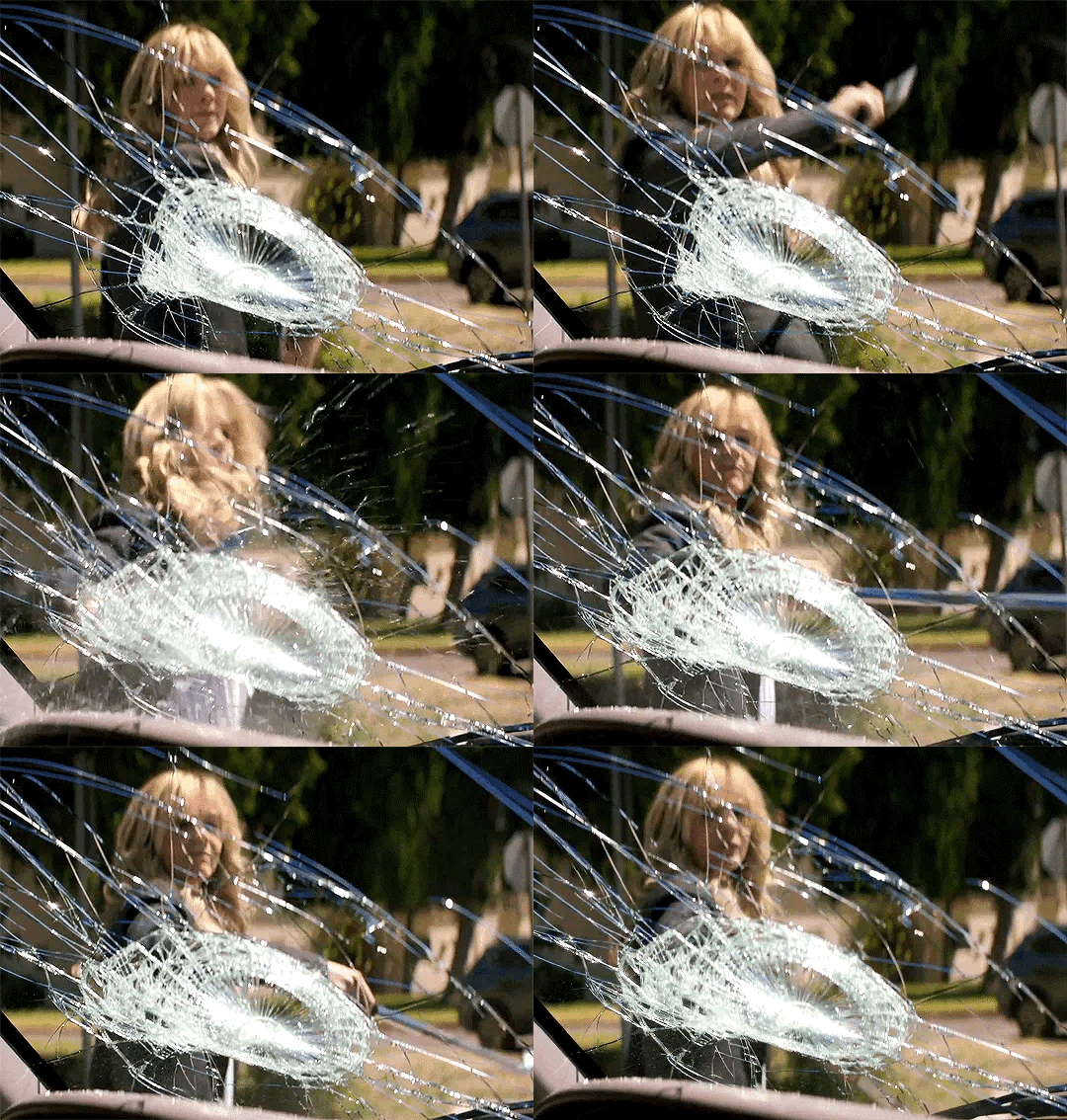
We see this standard in other films too: Promising Young Woman, Don’t Worry Darling.
There’s no longer an acceptable cultural ideal of a woman surviving—of a woman fighting for her right to her own life and actually getting to keep it. Triumph becomes an afterthought, or it’s withheld entirely.
Promising Young Woman lands on a sexually violent final act that ends with the lead character’s death. Her murderer is also the man who raped her best friend. Neither woman lives to see justice prevail. I remember finishing the movie and being left with a sour taste in my mouth—not because it was bleak, but because it felt like the story needed a dead woman to make the point stick.
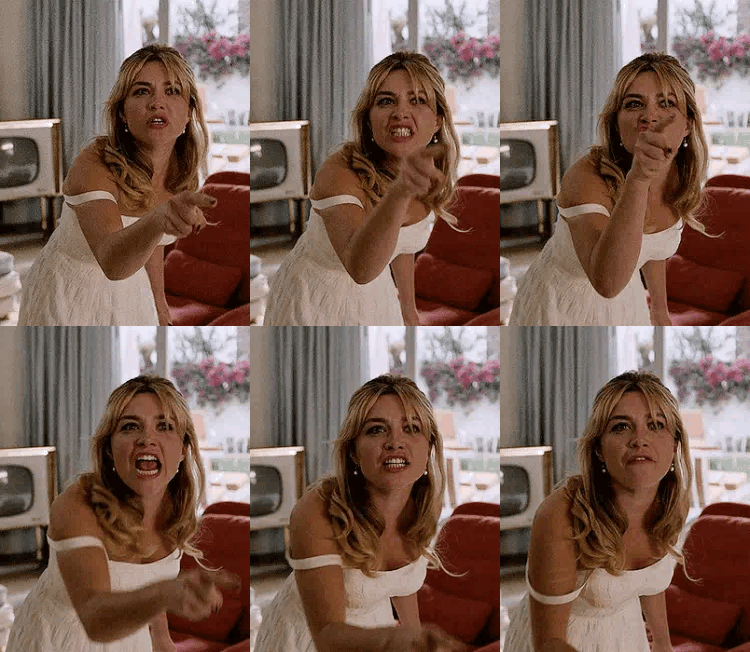
Don’t Worry Darling spends its runtime following Alice as she tries to uncover the mystery behind the Victory Project. The movie ends ambiguously—the audience doesn’t get to see if she escapes the simulation or is simply recaptured. A woman has her autonomy stripped from her by her man-baby husband, and we don’t even get the dignity of watching her survive.
I believe media reflects our cultural ideals. We’re in politically trying times. Women’s rights are being stripped away as I type this. ICE is separating families and murdering civilians.
To watch our media lean so heavily into themes of death and lack of bodily autonomy is scary. It feels final. It feels reinforcing. It feels like some weird form of propaganda: make the masses comfortable with conformity and they will eventually comply.
Incels. Podcast culture. Neonazism. Fascism. We’re spinning around and around in a circle.
The rebellion of the nasty woman!
But on the flip side, there’s a rebellion occurring among women. We’re actively rejecting the ideal that keeps getting forced down our throats.
“Nasty, nasty bad pop girls” like Addison Rae and Charli XCX embracing vulnerability and the complexity of being a woman—not a girl, but a woman.
“Messy woman” literature—Ottessa Moshfegh, I’m Glad My Mom Died by Jeanette McCurdy, My Last Innocent Year by Daisy Alpert Florin—books that are curious about the female experience. It’s not perfect and that’s the point.
We have books and films about motherhood and postpartum psychosis, such as Die, My Love and Nightbitch. Women are waking up and saying—wait, I can want more? More life, more love, more sex, more silence? I’m not just a functioning vessel for everyone else to use for their own gain? And as a woman myself, I think that’s pretty fucking cool.
Hell hath no fury, as they say. The feminists of the 1970s had the Final Girl. Debate about how “feminist” the trope is is more than fair. But it was kick-ass for the sole survivor to be a female. Everyone else got sliced and diced, but the “weaker sex” lived on to tell the tale.
I think our radical, messy woman will do the same. I think women will do what we always do: we’ll grieve for each other, fight for each other, and make sure our ideas live on.
"Both endings are technically ambiguous, but the messaging is clear. You do not exist to be happy. You exist to teach everyone else resilience. You exist to make other people better. And then you vanish—quietly, conveniently—before anyone has to do the hard work of accountability."
This this this. To me, the ambiguity is plausible deniability to the inevitable pushback from fanbases like Stranger Things and Wicked while helping push the message that women, especially traumatized women, are "experiences" not people -- the catalyst for growth, never mind the pain these women inherit so this growth is possible.