

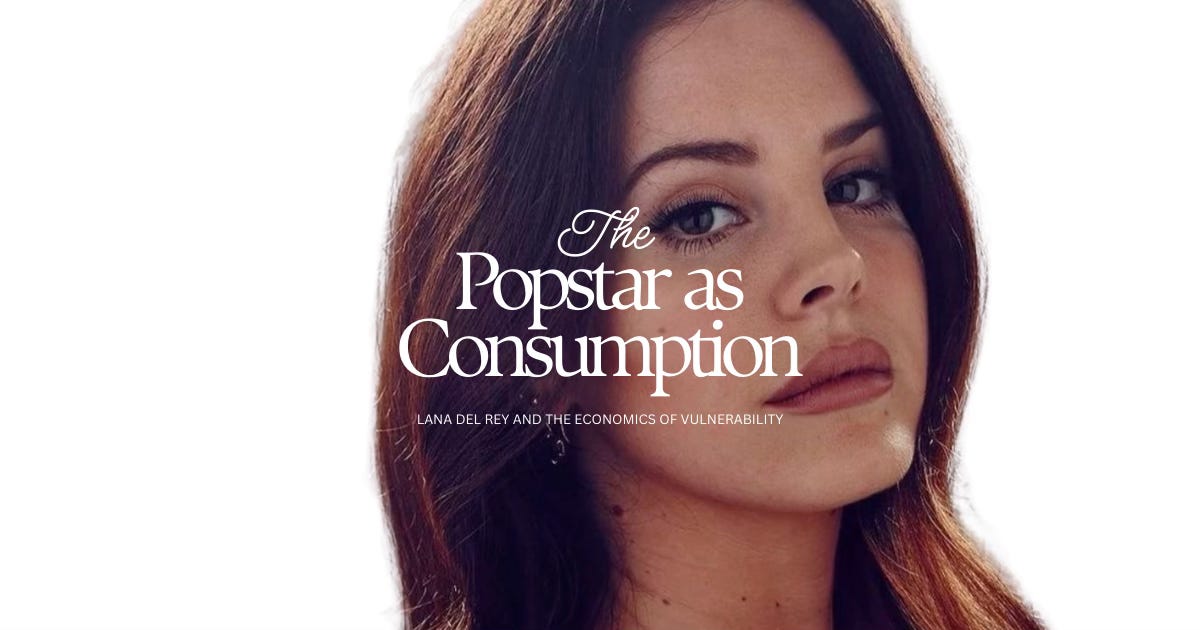
The Popstar as Consumption: Lana Del Rey and the Economics of Vulnerability
On Devotion, Desire, and the Business of Being Sad
Warning: I have a very odd sense of humor so you may or may not find the following essay funny.
i. the era of longing
If you operated a Tumblr blog between the years of 2012–2015, you should be entitled to financial compensation.
Tumblr was a cesspool of drama. Imagine the worst teenage girls you know sitting in a group discussing their depression, self-harm habits, eating disorders, and Superwholock. Then multiply that by three, and you’re at the beginning stages of trying to understand Tumblr’s power in its heyday.
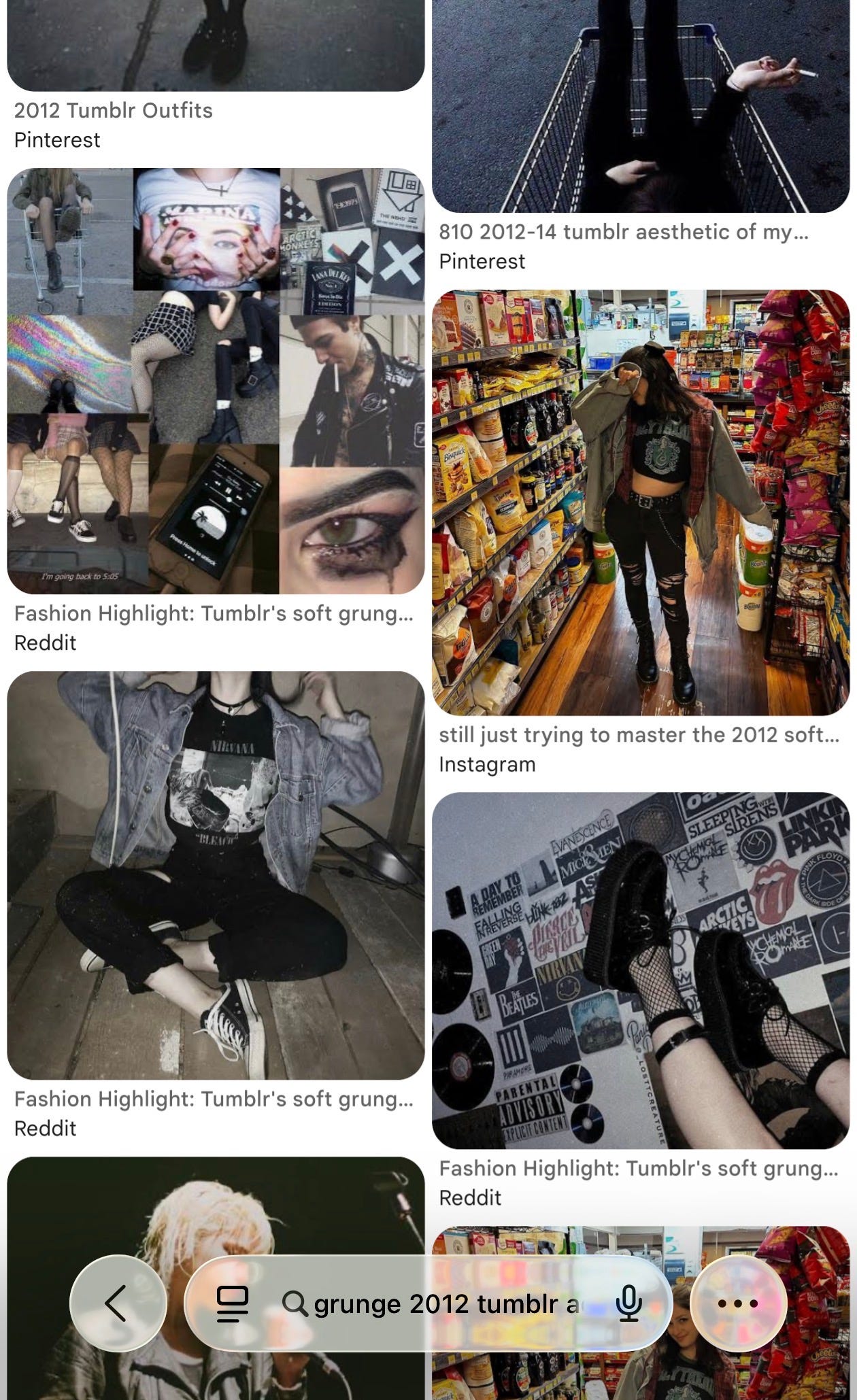
Looking back, I think having access to that much information likely didn’t help as I was going through puberty. I was definitely saving photos of girls with self-harm scars on their legs to my tablet.
(If you’re worried, I never actually was a cutter because I tried one time and it hurt, so I stopped. I did scratch myself with pen caps for attention. No one cared.)
Oh, and those pro-ana diet graphics that I never actually remembered to try.
G-Eazy said it himself: “I’m in love with those Tumblr girls with skinny waists and drug habits.” See what I mean?
Music was a defining cultural landmark for the average Tumblr user. Your iTunes probably went as follows:
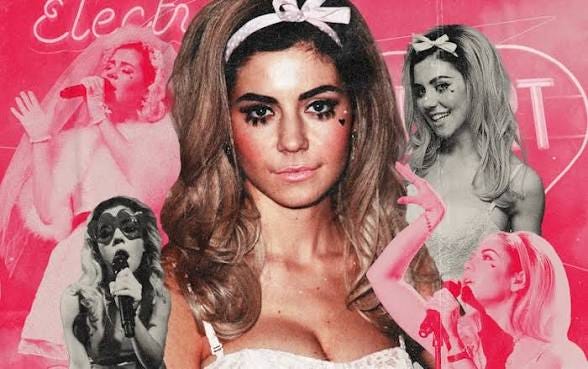
Blue Jeans by Lana Del Rey
Video Games by Lana Del Rey
Teen Idle by Marina and the Diamonds
Sweater Weather by The Neighbourhood (honorable mention)
New Americana by Halsey
Tumblr didn’t invent female fragility. It curated it. It was cool and different to be the sad girl obsessed with her boyfriend or some random guy in her English class.
Were you really online if you weren’t ruining your own morning before even making it to first period? Sigh.
By the time Lana Del Rey arrived, the aesthetic of beautiful suffering had already been rehearsed. She simply gave it production value.
ii. lana as archetype: the patron saint of beautiful suffering and romantic devotion
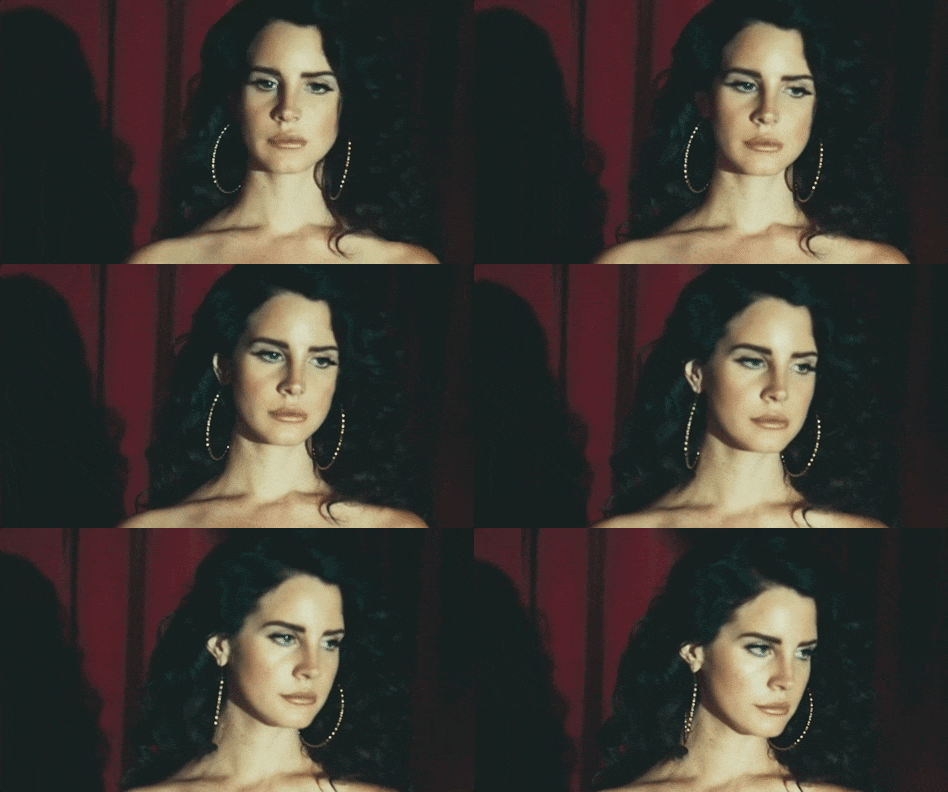
I often wonder if Lana’s image is very good marketing or if she’s just simply… like that.
Her meteoric rise is similar to Gaga’s; she just happened to hit the scene at the height of something. For Gaga, the Internet was really taking off when Just Dance started receiving radio play. With Lana Del Rey, Tumblr was on the steep climb toward… something. Her appearance solidified it for what it was.
It established this generational idea for young women that to be in love was to suffer. You are designed to orbit this one man and hopefully he gives you love back. Even if he smacks you around a bit or calls you names, you earned a sliver of happiness for your efforts.
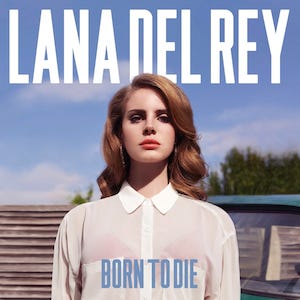
submission as romance
In 2012, empowerment was loud. “Lean in” feminism promised ambition, corporate dominance, self-branding. Pop music echoed it — roar louder, shake it off, run the world. “Girlbossing” was one of many phrases used to describe the corporate woman of the time:
“Girlboss” is a neologism that denotes a woman “whose success is defined in opposition to the masculine business world in which she swims upstream.”
Basically, women wanted to freely be bitches in corporate settings like men get to be. Ironically, it became a joke term used to describe white women who buy monogrammed pillows from Target and listen to Taylor Swift.
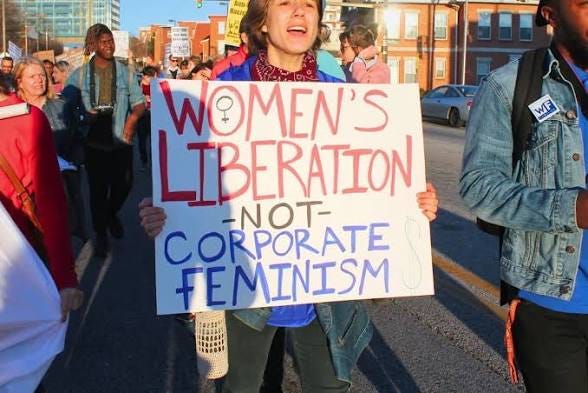
Lana did the opposite. She longed.
Lana Del Rey’s aesthetic was this amalgamation of Lolita, Americana, and the 1950s. Her entire first album seems to even be dedicated to the idea of Marilyn Monroe and Jackie O, who are, in their own right, tragic figures.
“He hit me and it felt like a kiss…”
“It’s you, it’s you, it’s all for you… everything I do…”
“Love is mean, and love hurts…”
Critics called it anti-feminist. Teenagers called it honest.
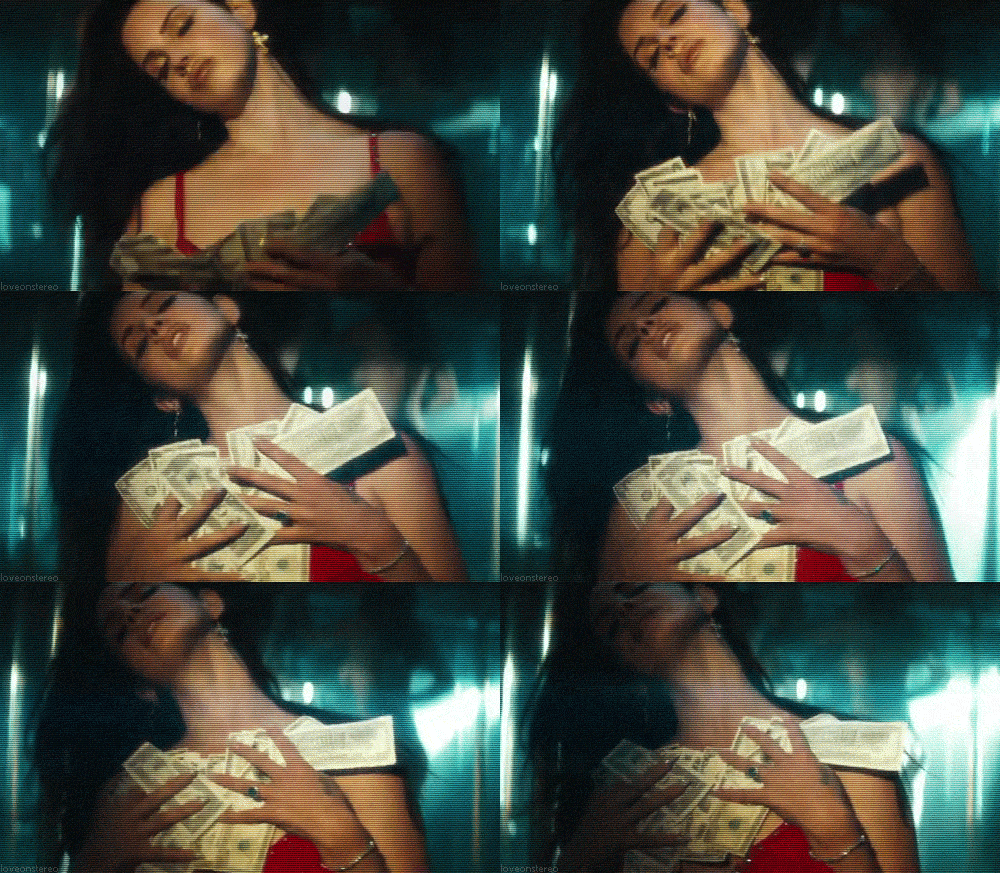
Lana explores this cinematic drama on her album Born to Die — and it became the exact theme she was criticized for. There was no space for a woman to sing about how painful her love life seemed to be. No adult woman wanted to listen to a woman singing about the exploitative parts of heterosexual relationships. Or fantasizing about being a stripper (Gods & Monsters). Especially because women were not at that point culturally. Relationships were all sunshine and rose petals in 2012, and to suggest otherwise was unheard of.
In a way, it’s not really vulnerability, is it? Her lyrics describe a type of individual who centers their partner in everything: his approval, his violence, his absence. She describes the women, characters, or herself as these wild, free spirits who know nothing and long for everything.
Her music mimicked the intensity of many teen relationships. You fall fast, fall hard, and it explodes into a million little pieces of pixie dust. And in a way, that’s why she was so impactful. I keep hitting this idea with a hammer, but Lana Del Rey’s music was for teenagers. How vulnerable can a teenager be? What depth do they truly possess? The antics of the lovesick and downtrodden are really only normal at fourteen, but when you reach thirty, it might be time to grow up.
iii. why it worked then
Many critics argued that Lana Del Rey was anti-feminist, and from her own mouth, she kinda was.
In 2014, she told The Fader, “For me, the issue of feminism is just not an interesting concept… I’m more interested in, you know, SpaceX and Tesla, what’s going to happen with our intergalactic possibilities. Whenever people bring up feminism, I’m like, god. I’m just not really that interested.”
She added that her idea of a feminist is a woman who can do what she wants. And, sure. We must have different definitions of the word.
You take a depressed woman in her mid-20s, layer in music about abusive relationships and claims that she doesn’t care for feminism… come on, you have a recipe for disaster.
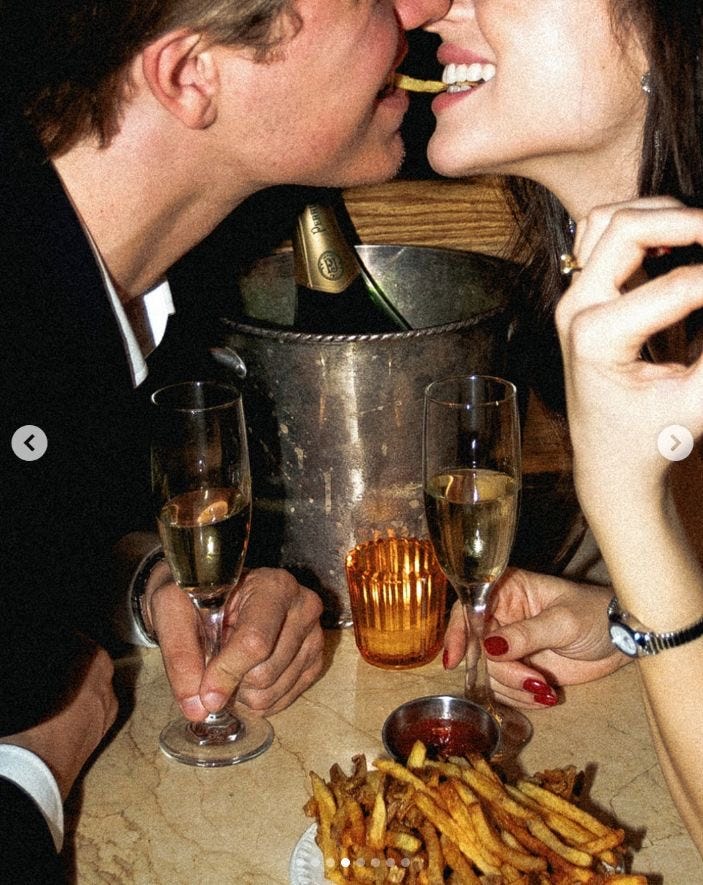
For millennial women, adulthood still promised the good job, the good husband, the neat conclusion. Lana’s fatalism clashed with that optimism. Boyfriend culture was very much aspirational, and dating apps were just beginning their ascent. For millennial women, the goal was to get the good job, the good husband, and settle down.
Now, you have “The Other Woman” singing on a public platform about not caring for your lifestyle and that she loves being a mess.
And according to Pitchfork, the music wasn’t that good anyway (Born to Die has a 5.5 rating).
iv. the cultural shift
A decade later, the romantic landscape looks different.
Within the last few months, two articles have gone viral based on the state of relationships:
Chanté Joseph’s Is Having a Boyfriend Embarrassing Now?
Bindu Bansinath’s I Love My Husband (Who Hates Me)
We’ve reached a fever pitch in conversations about “decentering men.” Women are acknowledging that many of their romantic prospects are kind of awful. Young men are leaning into the manosphere. Women are focusing on their careers. And we have reached a gendered cultural divide.
Where many women are typically willing to settle, we get short-form content of men essentially bullying their wives and women “ha-ha-ing” along with it. We’re seeing the reality of the woman’s “biological destiny” — unhappiness and burnout masked as contentment.
As a result, these unhappy wives and mothers kick and scream at single or child-free women, when they should probably just ask their husbands to pick up their socks.
What was once controversial is now absorbed into the mainstream. Once Tumblr fizzled out, the cultural urgency around that archetype did too. If Lana thrived in an era where romantic devotion felt aspirational, she now exists in a moment where romantic detachment feels intelligent. Perhaps that explains her country music pivot.
Lana Del Rey captured an era when longing felt like destiny. She turned romantic suffering into spectacle, into sound, into something girls could wrap around themselves. The hunger has shifted. The girl who once ruined her morning to Blue Jeans now wonders whether she needs a man to ruin it at all.